Online Eating Disorder Therapist UK
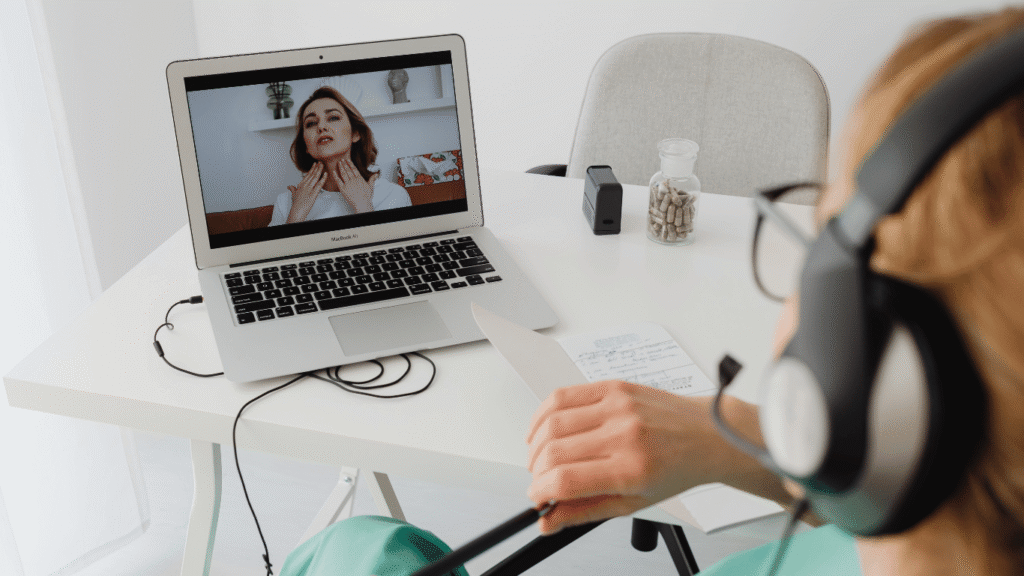
An Online Eating Disorder Therapist UK service allows people based in the UK to access specialist psychological support through secure video sessions without needing to travel to a therapy room. Online eating disorder therapy can address restrictive eating, binge eating, compensatory behaviours, rigid food rules, avoidance, and other psychological patterns when remote outpatient care is clinically appropriate. The effectiveness of the work depends less on physical location and more on appropriate assessment, specialist therapeutic input, regular engagement, privacy, and access to additional medical or nutritional support when required.
Online therapy has particular practical advantages in eating disorder care because specialist therapists may not be available within convenient travelling distance. At the same time, remote therapy should not be treated as automatically suitable for every person or every stage of an eating disorder.
How Online Eating Disorder Therapy Works In The UK
Online sessions generally take place through a secure video platform.
You and the therapist meet at an agreed time in much the same way as an in-person appointment, but you join from a private location using a computer, tablet, or suitable device.
The clinical work can remain structured.
A therapist may assess current eating patterns, identify behaviours that maintain symptoms, explore triggers, work with rigid beliefs, and review changes between appointments.
The screen does not turn treatment into informal advice or a simplified version of psychotherapy.
An online eating disorder therapist in the UK can still use a clear treatment framework and individualise sessions according to the person’s needs.
Online Therapy Can Reduce Geographical Barriers
Access to specialist eating disorder therapy varies considerably between areas.
Living outside London or another large city may mean fewer local options. Even where specialist services are available, commuting can make weekly appointments difficult to sustain.
Online therapy removes much of that travel burden.
Someone in another part of England, Scotland, Wales, or Northern Ireland may be able to attend appointments from home rather than limiting their search to professionals within immediate travelling distance.
This can be especially useful for people with demanding work schedules, mobility difficulties, caring responsibilities, or long journeys to specialist services.
The benefit is practical rather than geographical SEO alone: therapy becomes easier to integrate consistently into daily life.
Remote Assessment Still Needs To Be Clinically Detailed
An online appointment does not remove the need for careful assessment.
The therapist still needs to understand what eating looks like across the day, whether food is being restricted, whether episodes of loss-of-control eating occur, whether compensatory behaviours are present, and how symptoms affect everyday functioning.
Emotional and behavioural patterns also matter.
The therapist may ask what triggers difficulties, what happens when routines change, which eating rules feel difficult to challenge, and what previous attempts to change have looked like.
An Online Eating Disorder Therapist UK should also consider whether remote outpatient therapy provides an appropriate level of care.
If important physical health concerns are present, additional assessment may be needed rather than relying on video therapy alone.
Medical Monitoring Cannot Be Done Entirely Through A Screen
This is one of the most important limits of online eating disorder therapy.
Psychological work can take place remotely, but certain aspects of physical assessment cannot.
Eating disorders may affect cardiovascular health, nutritional status, hydration, endocrine function, gastrointestinal health, bone health, and other areas of physical functioning.
Where relevant, monitoring may require in-person healthcare.
An online therapist may therefore work alongside a GP, dietitian, psychiatrist, specialist service, or another appropriate professional depending on the person’s clinical needs.
Remote psychotherapy should complement necessary medical care rather than replace it.
Online Sessions Can Focus On Real-Life Eating Patterns
One advantage of remote therapy is that sessions happen in the environment where many everyday eating behaviours actually occur.
A client may be sitting in the same home where food rules, avoidance, checking behaviours, or difficult eating episodes typically happen.
This can make certain patterns easier to describe accurately.
A person might notice that a particular room, time of day, work routine, or situation regularly activates eating-related thoughts.
Therapeutic exercises can also be discussed in direct connection with everyday circumstances rather than remaining abstract.
The aim is not to turn the home into a treatment environment. It is to connect psychological work more closely with the situations in which symptoms actually appear.
Privacy Is Essential For Online Therapy
Remote therapy is easier when you have a space where you can speak openly.
A person who worries that family members, colleagues, housemates, or a partner can hear the conversation may find it harder to discuss eating behaviours honestly.
Using headphones can help, but the wider environment still matters.
The therapist should also use appropriate professional systems and explain confidentiality, communication boundaries, and what happens if there is an urgent concern.
Online therapy works best when both sides can give the session their full attention.
Joining from a busy workplace, car park, café, or frequently interrupted environment can reduce the sense of therapeutic privacy and continuity.
The Therapeutic Relationship Can Develop Online
Some people assume that therapy through a screen will automatically feel detached.
Physical presence changes the experience, but a therapeutic relationship can still develop through regular video sessions.
The therapist can respond to tone, pauses, facial expression, uncertainty, avoidance, and emotional changes during conversation.
More importantly, trust develops through consistency.
Feeling listened to, being able to ask questions, understanding why particular therapeutic work is being suggested, and having disagreements taken seriously all contribute to the therapeutic relationship.
A suitable online therapist for eating disorders should provide the same professional boundaries and clinical attention expected in face-to-face psychotherapy.
Online Therapy Still Involves Work Between Sessions
Eating disorder patterns do not occur only during appointments.
Therapeutic work often needs to connect with what happens during the rest of the week.
Depending on the treatment approach, a therapist may ask you to observe certain triggers, notice rigid thoughts, record relevant eating patterns, practise a different behavioural response, or pay attention to situations where symptoms become stronger.
This is not intended to become another perfectionistic task.
Information from everyday life gives therapy a more accurate picture of what is maintaining the difficulty.
The following session can then examine what happened, what felt difficult, and what needs to be adjusted.
Online Therapy May Suit Some People Better Than Others
Practical convenience alone does not determine whether online treatment is appropriate.
A person may prefer remote sessions and still require a level of medical or psychological support that cannot safely be provided through standard outpatient therapy.
Clinical suitability may depend on:
- physical health and medical stability;
- severity and frequency of eating-disorder behaviours;
- ability to engage with outpatient therapy;
- availability of additional support when needed;
- privacy at home;
- current psychological risk.
Some people may need more intensive or coordinated care.
The purpose of assessment is to match the format of therapy to clinical needs rather than assuming online treatment is always either appropriate or inappropriate.
Online Therapy Can Support Continuity
Regularity can be particularly valuable in eating disorder therapy.
Treatment may become harder to maintain when appointments repeatedly change because of travel, work commitments, relocation, or long journeys.
Online sessions can reduce some of these disruptions.
Clients who travel within the UK or divide their time between locations may find that remote sessions provide greater continuity, subject to the therapist’s professional arrangements.
Maintaining the same therapeutic relationship can allow treatment to keep building on established work rather than repeatedly restarting after practical interruptions.
Continuity does not guarantee progress, but it creates a more stable setting in which psychological work can develop.
What To Look For In An Online Eating Disorder Therapist
Online availability should not be the only criterion when choosing a therapist.
Relevant eating disorder experience remains important.
The therapist should understand restrictive patterns, binge eating, compensatory behaviours, rigid rules, avoidance, and the physical health considerations that can accompany eating disorders.
They should also be able to explain how online treatment is structured.
Useful practical information includes session frequency, confidentiality, communication between appointments, emergency procedures, and how additional healthcare needs are handled.
An Online Eating Disorder Therapist UK service should combine remote accessibility with a clinically responsible treatment framework.
Online Therapy Should Remain Individualised
Remote care can become overly standardised if every client is expected to follow the same programme regardless of their presentation.
Eating difficulties vary considerably.
One client may need to work primarily on rigid routines and avoidance. Another may experience recurring cycles of restriction and loss-of-control eating. Someone else may have particular difficulty tolerating uncertainty around meals.
The therapeutic process should reflect these differences.
Progress can also look different between individuals.
Reduced symptoms may matter, but so can greater flexibility, less mental preoccupation, earlier recognition of triggers, and an increased ability to respond differently when familiar urges appear.
When Online Therapy May Need To Be Reconsidered
The suitability of remote treatment can change over time.
A person who was initially appropriate for outpatient online therapy may develop physical symptoms, increased behavioural risk, or a level of difficulty that requires more intensive support.
Therapists need to remain attentive to these changes.
Recommending additional care is not evidence that online therapy has failed. It means the level of treatment is being adjusted to match current clinical needs.
Similarly, someone who previously needed more intensive support may later be able to use outpatient online therapy as part of ongoing psychological care.
An Online Eating Disorder Therapist UK should therefore treat remote therapy as one possible format within a wider clinical framework rather than as a universal alternative to every form of eating disorder treatment.
Frequently Asked Questions
1. Can I See An Eating Disorder Therapist Online In The UK?
Yes, online eating disorder therapy is available for many UK-based clients when remote outpatient treatment is clinically appropriate. Suitability depends on psychological symptoms, physical health, privacy, and the level of support required.
2. Is Online Eating Disorder Therapy As Serious As In-Person Therapy?
Online therapy can involve structured assessment, psychological treatment, behavioural work, and progress monitoring in much the same way as face-to-face care. The main difference is the method of communication rather than the clinical purpose of therapy.
3. What Do I Need For Online Eating Disorder Therapy?
You generally need a reliable internet connection, a suitable device, and a private space where you can speak openly. Any necessary medical or nutritional monitoring may need to take place separately.
4. Can An Online Eating Disorder Therapist Work With Clients Across The UK?
An Online Eating Disorder Therapist UK may be able to work with clients in different UK locations depending on their professional registration, insurance, service arrangements, and the client’s clinical needs.
5. When Is Online Eating Disorder Therapy Not Suitable?
Online outpatient therapy may not provide enough support when there is significant medical instability, high clinical risk, or a need for intensive nutritional, psychiatric, or supervised care. In these circumstances, a different or more coordinated level of treatment may be appropriate.