Can't Believe I'm Saying This: I Agreed with Jillian Michaels (On Some Things)
Jubilee video: Surrounded, Jillian Michaels vs. Body Positivity Movement
A month ago, YouTube channel Jubilee posted a video that ended up among body image activists, gym-goers, and eating disorder recovery spaces. If you haven’t watched it yet, here it is:
I genuinely think this is one of those videos that almost anyone could benefit from watching, whether you work in this field or not. I actually wanted to make an Instagram reel about it, but felt a bit shy… so here we are instead, with my two cents.
I want to begin by saying: these are all my personal opinions. There is no hate toward anyone in the video. If anything, I have a lot of respect for them. Agreeing to sit in that kind of setup, debate on such a sensitive topic, knowing millions of people (5.6 million?!) are going to watch and judge you… that takes courage. As my father would say: ‘‘I admire your moral/civil courage, I never could’ve done it.’’
I’m also aware I had the privilege of time to pause, rewatch, think and formulate my opinions carefully and precisely.
I also acknowledge that I am a cisgender, small-framed woman and I’m privileged because of this. I recently saw a TikTok explaining the concept of privilege this way: imagine being left-handed in a world that was built for right-handed people. You would immediately notice when you enter a classroom—you might even struggle with something as simple as the chair you’re sitting on—while a right-handed person may not even notice such small things. I am well aware that I’m one of the right-handed people in this story and there are experiences that are beyond my recognition or imagination.
Having said that, my small frame did not protect me from developing different eating disorders or criticism about my body. I surely wasn’t immune to the media we were all exposed to.
I am also aware that I, as one person, am limited. That’s it. I can only form my own opinions based on my background as a therapist, what I’ve consumed, and the culture I’ve been part of—both individually and collectively. Everything I write is inevitably filtered through my own limitations and beliefs. But I value authenticity, and this is exactly why I’m sharing my thoughts—transparently and kindly, just as I would with a friend I trust or a client in a therapy session.
And I LOVE these discussions. Whether you agree with me or see things completely differently, I’d genuinely love to hear your thoughts—let’s stimulate our minds a bit in this community. If you enjoy nuanced, honest conversations like this, you can subscribe here:
The ‘O’ Word Moment: When We Get Stuck in Semantics
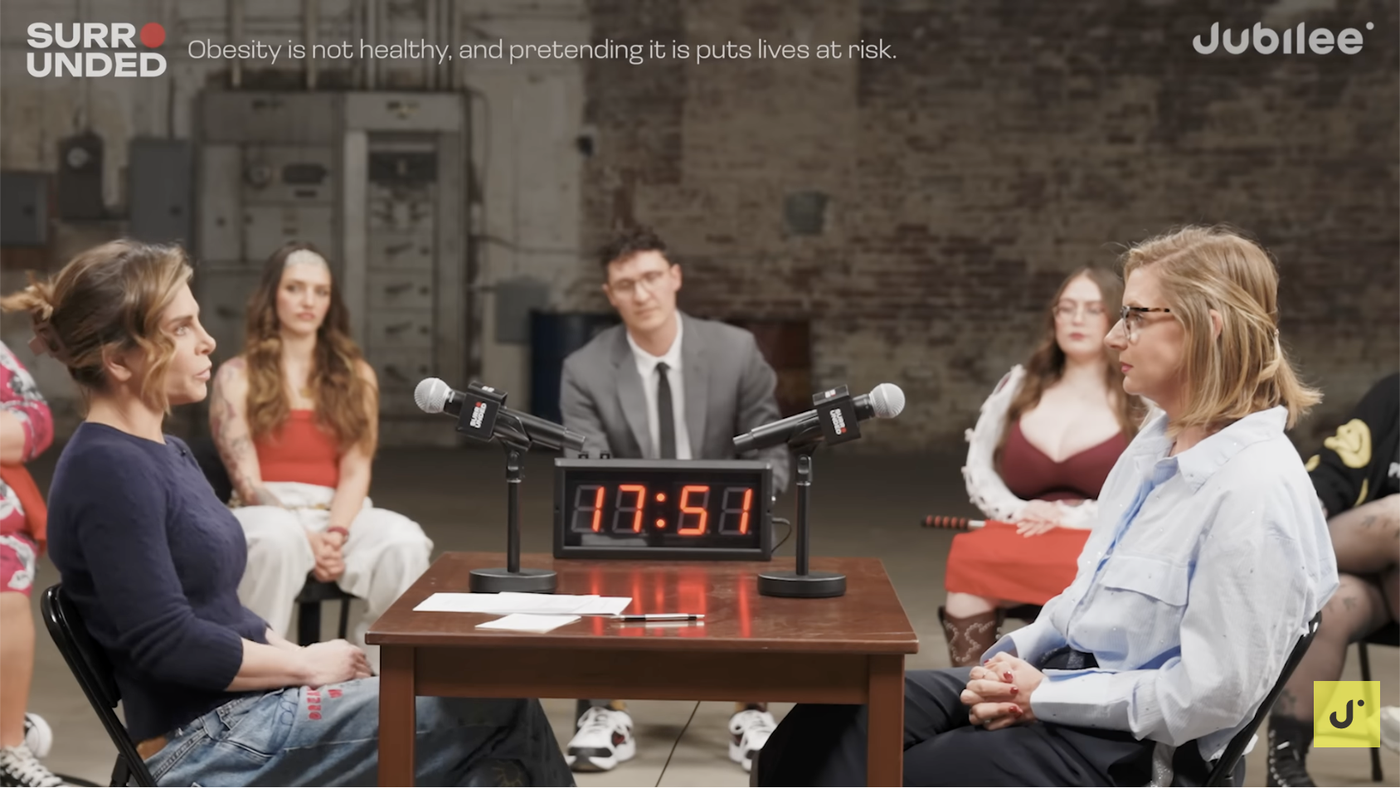
Edie, first therapist to talk with Jillian, begins the conversation by saying:
‘‘I am not going to use the ‘o’ word’’
In all honesty, it made me laugh. It’s just the way it is said… the ‘O’ word, like there is something to be ashamed of, tip-toed around that we shall not even speak about it.
I thought this is what we were trying to move away from?
By trying to de-moralize the word, it almost becomes… re-moralized.
It’s similar to the word “fat.” The meaning depends so much on context. We cannot leave the context out when interpreting words. Someone uses the word obese or overweight in a medical context, then it may be a bit more neutral (not to say healthcare system isn’t biased and fatphobic) If someone uses the word fat as an insult, then it’s not a neutral word.
In a therapeutic context, when clients talk about ‘'feeling fat’, it often refers to a subjective experience of the client. If I tell my client ‘Oh, you feel that way but it’s not a bad thing to be fat, you know? Let’s not use that word’, I am totally ignoring a moment where my client opens a door to connection, understanding, a doorway into their emotional sphere. This is what happens when we get stuck in semantics.
Also, not everyone is equally immersed in such discourses. I assume Edie was trying to define terms before getting into the discussion—I understand the intention, but it came across a bit patronizing indeed, hence Jillian’s response (“Are we debating or am I 3 and are you my mommy?”). She reflects something real: she represents a large group of people who are just… not in these conversations every day, while others are.
But which is more important: getting lost in semantics or discussing the deeper issues, like fatphobia?
Secondary Gains (Why We Stay Stuck)
Jillian talks about a participant losing 100 pounds in The Biggest Loser: Once they go back home, the participant’s mother is upset over the weight loss. Jillian reveals the function of eating together/binge eating, losing connection to the family.
This is basically what we call secondary gain in therapy. When a behaviour that seems problematic on the surface can actually be meeting an emotional need.
Here, the act of eating, which deemed “problematic” to the participant was actually meeting emotional need of bonding with his mother.
It is a similar story to a client having anorexia nervosa, who has been taught to be strong her whole life and was left alone with her emotions. They become underweight and now everyone is concerned with their wellbeing, revolving around them, telling them to eat—meeting the need for connection in a disordered way.
And it contributes to what keeps people stuck in their eating disorders.
Tending Your Own Garden First: Personal Work vs. Activism
A general theme that comes up in different parts of the video is Jillian arguing all the talk about body positivity is moving them away from their own traumas, externalizing the blame and keeping them stuck in their own lives.
It’s of great importance to differentiate a social justice movement and personal life, although they are heavily influenced by each other. Naturally, we may become passionate about a struggle we personally endured. This is exactly what happened to me: I had an eating disorder and couldn’t get proper help, so I decided to open my Instagram account Realistic Body Therapist and become a therapist.
I could only do that when I’ve been through my own therapy and recovered from my eating disorder. I’m just reminded of the last sentence of the book Candide by Voltaire:
‘‘Il faut cultiver notre jardin’’ which translates to ‘‘We need to tend our own gardens’’.
We first need to work on ourselves on a personal level, to be preoccupied or fight for something on a societal or activism level.
Not because activism (or being an activist for personal reasons) is bad—it’s not. It can be incredibly supportive, identity-building, even healing. I fully recognize their value in human psyche. Fight for what you believe in. We need more of that, looking at where the world is going.
But our garden should come first. We cannot attend to other gardens, forests, the world while our garden’s pots are broken, the grass has become yellow, and bugs are flying around.
Sometimes, the internalized shame can make us want to move away from that messy garden, and tending other gardens can become a way to avoid looking after ours.
And I think that’s what Jillian is trying to say—although she says it in a much harsher way.
No one can tell you whether your view is avoidant or true to yourself, but you. You decide. If this lit up a question mark in your mind, it’s worth asking yourself:
Am I actually okay in my own life? Or am I outsourcing that to external validation, community, or even “being right”?
How fragile is my self-esteem? When I get triggered, how do I take care of my Inner Child?
Ethics of Weight Loss
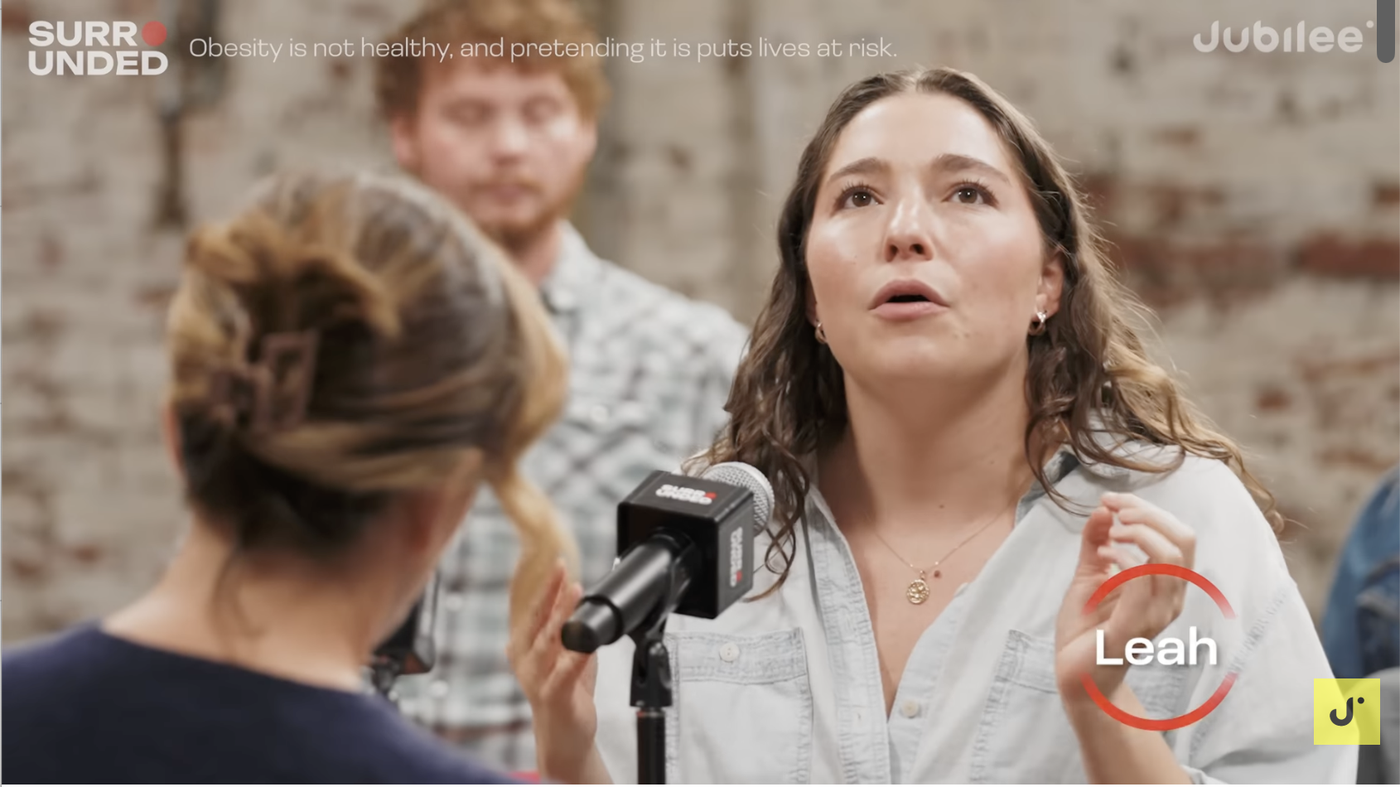
Leah, the dietitian saying
‘‘I do not encourage weight loss cause it’s unethical’’
It’s funny how many people in the comments section went crazy about what she said and mocked her.
To me, it sounded like: I don’t assume weight loss is the goal, and I don’t push it onto people.
I share this stance. I’d like to believe their choice of word ‘encourage’ was very specific here. Why would we do encourage weight loss to a person who hasn’t asked for it? Who are we to decide that?
And this is what body positivity movement is about: fighting against the fatphobia that doesn’t allow people access to healthcare and gives people the audacity to make comments and give unsolicited advice just because of their weight.
I did some digging and in their follow-up interview ‘‘Is Body Positivity Disempowering? Follow Up (ft. Jillian Michaels) Surrounded’’ where Jillian says:
‘‘I’m like a vampire, I don’t come in or bite unless I am invited’’
And I like that.
Jillian and Leah might have more intersection than they realize, although they didn’t recognize it at the moment due to the ego fight they had over ‘‘lipotoxicity’’ and whether it shows up in nutritionists’ curriculum.
What I Value in Practice: Autonomy
In a therapeutic context, the difference lies in the person’s autonomy when it comes to weight loss interventions:
Do they, as the person in charge of their life, see this as a problem?
Is it something they want to work on?
Is it a realistic concern, coming from medical point of view?
Often people come in thinking their body is the problem.
There are underlying unmet needs, past experiences, internalized beliefs—things that get expressed through body image, but aren’t actually about the body or the weight it carries.
In my clinical work, when people deal with binge eating and they recover, you might be surprised that I quite often hear:
‘‘I thought my body was the problem, but it wasn’t really’’
Sometimes people lose weight and nothing really changes internally, they still feel insecure and not good enough.
Sometimes nothing changes physically —no weight loss, nothing— but their mental wellbeing improves and suddenly their body doesn’t feel so problematic anymore.
Villainizing Weight Loss
When we roar against people like Jillian without really considering shades of grey (and trust me, I get why—13-year-old me did her workout videos for hours, and I also know how cruel she was on The Biggest Loser, which was absolutely NOT okay), we forget something important:
Just like there are people in larger bodies who are genuinely happy with their size, there are also people in larger bodies who are genuinely unhappy—for many reasons.
Yes, societal pressure plays a role, but also things like perceived reduced mobility or health concerns.
If someone does want to lose weight, and they come to you for that, it’s okay to give them the intervention they are looking for.
We cannot just villainize weight loss. At the same time—this does not mean we push weight loss onto people unsolicited or without proper medical and psychological assessment. That’s exactly what body positivity was pushing back against in the first place.
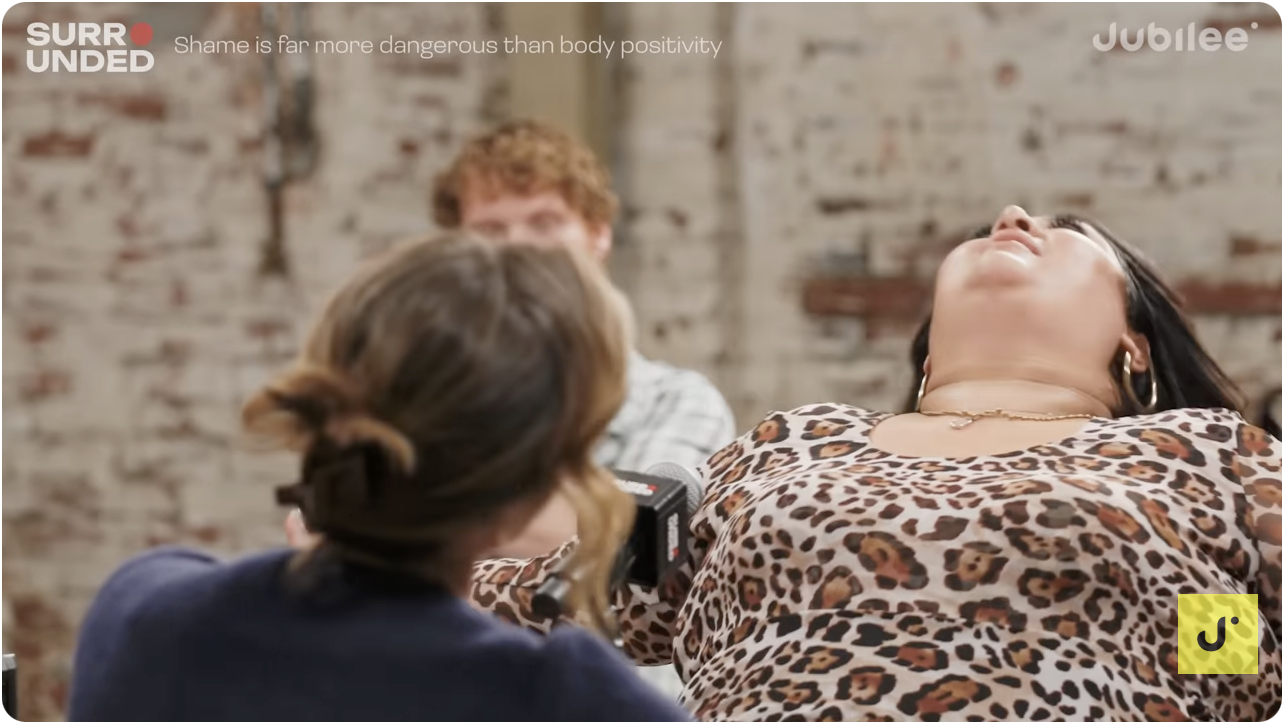
I love the moment where Marcy shakes her whole body, joking:
‘‘A weight release, my trauma I’ve released it, and then I’ll be skinny’’
‘‘The world wants to tell me that I have a thin woman inside of me that is waiting to get out… I hate her’’
I laughed out loud (for real, not when you say LOL and you are just blank staring at your phone, but a real, loud giggle came out of me)
She captures what happens so well here, when we patronize people to lose weight, acting like we know better than them!
Not everyone secretly desires to be thin. Not everyone has hidden trauma that would be ‘‘fixed’’ by weight loss. Some people are happy with their bodies and it’s on NO ONE to judge or tell them otherwise. This is what we should aim for as a society!
Aren’t We Blaming the Wrong Thing?
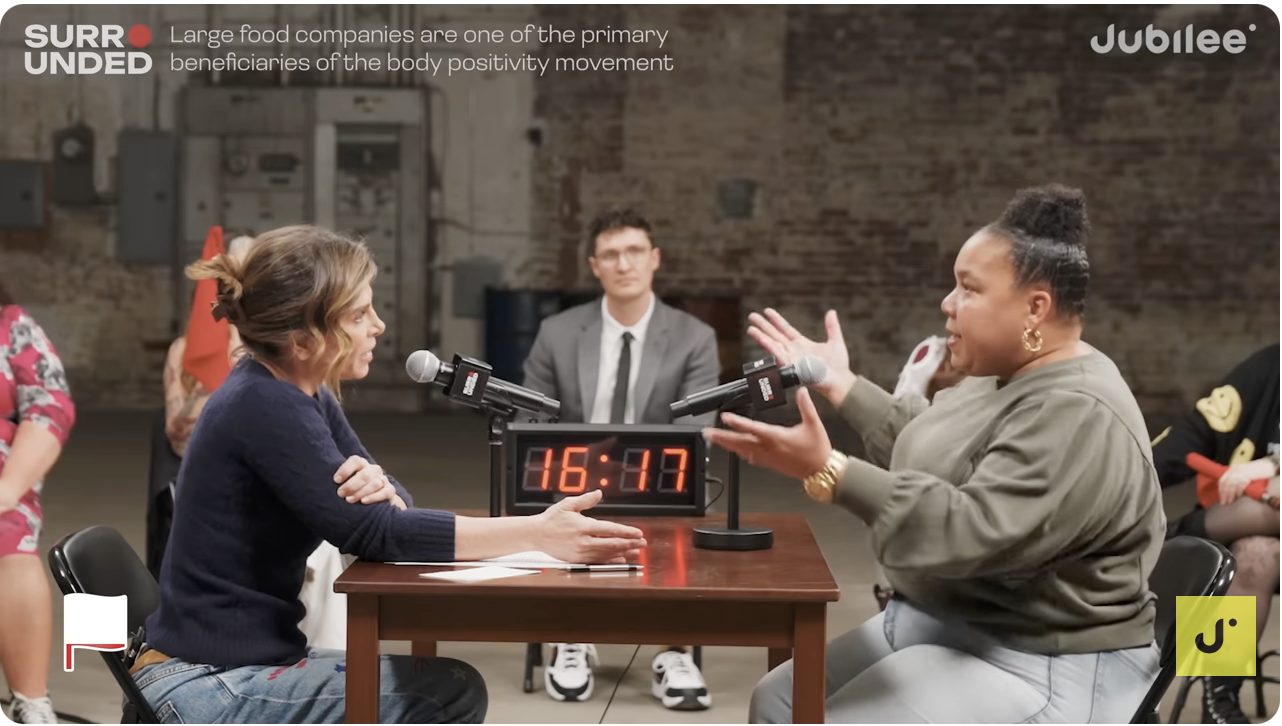
Jillian claims:
‘‘Large food companies benefiting from body positivity’’
When Shafone says:
‘‘Why can’t the entire population hold food industry accountable?’’
So right. Louder for the people in the back Shafone!
After reading the book Ultra Processed People by Chris van Tulleken, I couldn’t agree more.
This is not a body positivity movement problem, it’s a systemic food industry problem.
Are body positivity spaces sometimes unintentionally feeding into that? Maybe.
But should they be the first target? No.
Why are we quicker to critique individuals than industries designed to keep people consuming?
Strongly Disagreed: Using Shame for Motivation
Shame as motivational agent for change.
*TikTok sound plays in the background: What the hell? What the helly?*
Just… no.
Even if shaming “works” short-term, it builds a harsh internal voice. It doesn’t create sustainable change—it creates fear, punishment, and disconnection.
Leah, the dietitian touches on something important:
‘‘A person in a larger body has experienced things that we cannot undo from the fat’’
The shame a person feels because of their body has worse effects on their mental health than their weight can possibly have.
We can never use shame for motivation. Even if it feels legitimate, even if it feels like it does the work. Frankly, not all’s fair in love and war.
From a therapeutic stance, this is only feeding a punitive voice inside your head. Your Wise Self doesn’t punish or motivate with shame. That part understands, offers compassion, but boundaries as well.
When we talk about being compassionate understanding, many confuse it with having no structure. Real change comes from something more balanced: compassion and boundaries.
Sometimes that sounds like:
I know we want to eat impulsively the chips now, I know we promised ourselves to stick to more nutritious foods. So maybe we can have a cup of the chips and add something nutritious next to it - like protein, veggies, fruits.
And speaking to yourself like you would to a child who needs guidance.
Imagine a child eating chips all the time because they don’t know any better. They’ve never had proper guidance around nutritious foods—they’re a bit lost. You’d gently help them explore different options, figure out what they like, and build a connection with what feels good in their body.
Not shame them or restrict them outright (“Don’t eat the chips—they’re bad for you!”), but also not leave them completely on their own (“Eat the whole cupboard, I don’t have the time or patience to deal with this”).
This is not punishment. It’s not restriction. This is self-care. This is balance.
Not “do whatever you want,” but also not “bully yourself into change.”
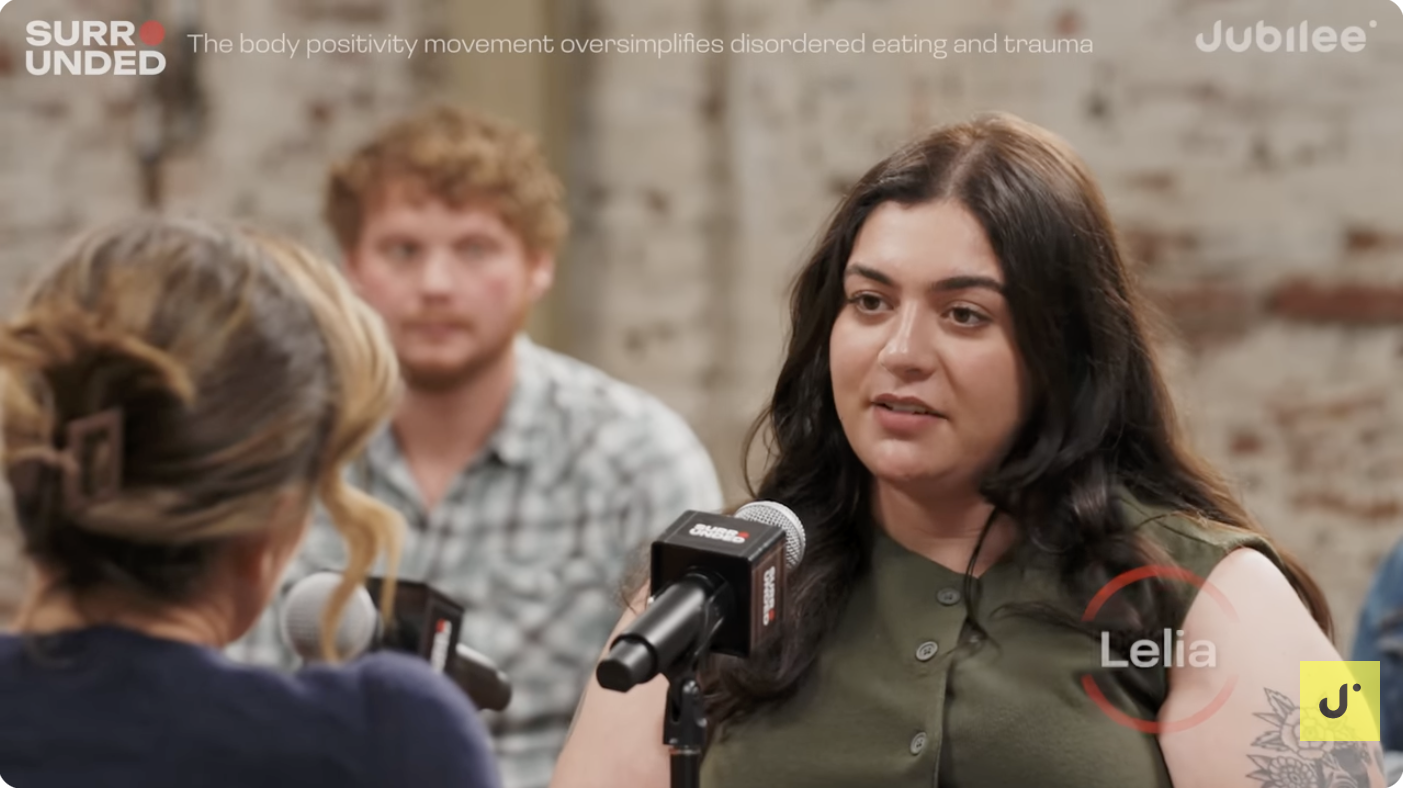
Jillian saying
‘‘I agree with shame and then what comes after? By looking in the mirror and I no longer think so [that my body is disgusting]. What comes AFTER?!’’
and Lelia says
‘‘Then I need to be able to consult experts who are also body positive towards my body’’
She is so right about that.
Health At Every Size
I’ll be honest—I was confused when Jillian kept saying “Healthy At Every Size,” because apparently this doesn’t exist (based on what I found). I am limited in my knowledge regarding these movements, so correct me if I’m wrong.
But let’s be clear on this: Whatever we want to call it, you should be allowed access to healthcare services REGARDLESS of your size and this is a basic human right.
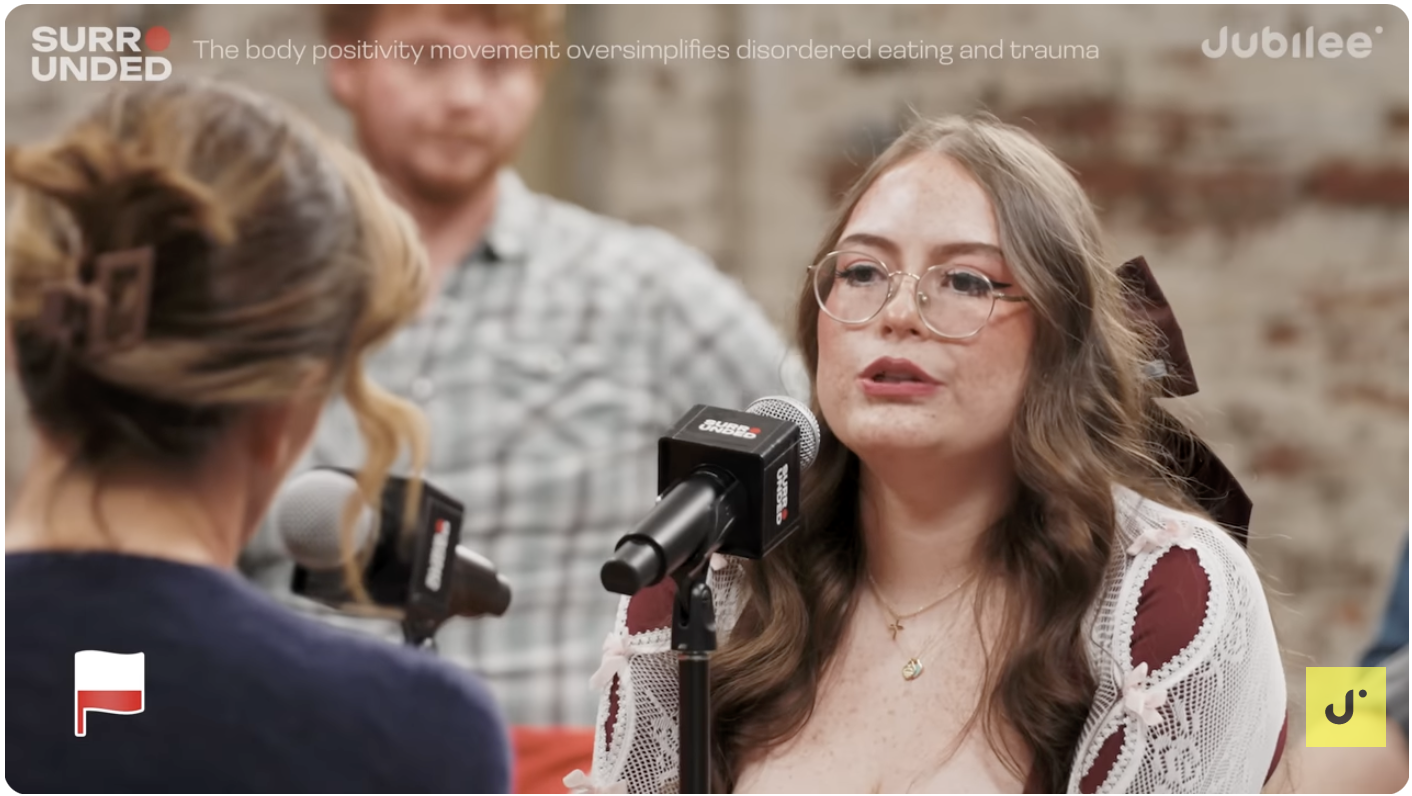
Summer, the speaker who comes out around 48 minute mark, is the perfect reason why we need to endorse Health At Every Size. She has had a medical condition called macromastia, meaning from a young age her breasts grew fast. She mentions having DDs at the age of 8 and needed breast reduction surgery for it, yet was told she needed to lose weight in order to do the surgery.
Why was she suggested to lose weight? She is a victim of the medical system relying on numbers of weight to treat a person, rather than attending to their complaints and pain as a patient. That’s not healthcare, that’s bias.
She wasn’t even overweight. She had a medical condition that caused her a lot of distress yet was told to lose weight to get access to the treatment. This is a moment I heavily side with the movement:
We need to work to reduce fatphobia, promote Health At Every Size approach with doctors and I can’t believe we’re even arguing over this but… you should have access to healthcare!
Body Positivity Isn’t Treatment
Body positivity is not a treatment modality we apply to eating disorders, far from that. This is crucial to remember.
It’s a movement. If it feels good, then it is helpful means, but cannot be a stand-alone treatment/lifestyle/movement to follow for people who struggle with an eating disorder or even their body image.
Body positivity movement might say this is not the intention, I fully respect that.
But online narratives have twisted it as: ‘‘Love your body!! You’re amazing as you are!! Why do you even have bad body image days, you goddess!!’’
And if you’re deeply struggling, that doesn’t feel empowering—it feels alienating, even shaming for not being able to relate to something so many people find liberating. I believe the pendulum is swinging the other way now because of this, why SkinnyTok is getting a lot of attention these days, I wrote about it here:
There’s a gap between intention and real-life impact—and we haven’t fully figured out how to bridge it yet.
The Middle Ground (Because Extremes Don’t Work)
Jillian claims ‘‘Body positivity movement is disempowering’’.
Body positivity movement can be disempowering when you expect the world to change first before you feel okay about yourself.
Body positivity can be empowering when you’ve done the work to change the way you see yourself and it gets you to ask for what you need in a world and fight for the world to change.
Both things can be true.
Jillian arguing ‘‘Who gives a fuck about what the world thinks?’’ lands too individualistic and honestly, a bit excluding—for people who need human connection (which is… all of us). It also doesn’t really land in collectivist cultures, where what others think of you is closely tied to belonging and connection.
At the same time, we can’t just ignore what people think—but we also can’t expect everyone to accept us, never judge us, never give us weird looks, or walk around carefully managing how we feel about ourselves. Those are two extremes.
We also can’t expect the whole world to use body-positive language or accept us at our current weight. That’s just not the reality—and honestly, rejection happens at any size. You can be in a larger body or a smaller body and still experience it.
That being said, there is a real skew here. People in larger bodies are more scrutinized, and I do believe body positivity activists are trying to change that. I stand with them.
Having said that, I’d like to bring in the nuance of a difference between pushing for change and expecting universal acceptance. Not everyone will accept you—and that’s a hard pill to swallow. I’m still working on swallowing that myself. But this is where the individual work comes in. It becomes less about convincing everyone, and more about finding your people—your community—and staying close to them.
Jillian says:
‘‘The world needs to change but we cannot rely on that for your well-being’’
And I wholeheartedly agree with that.
Not all media outlets will change. Diet culture might not disappear anytime soon. And if your mental wellbeing depends entirely on that happening… you’re putting yourself in a very fragile position.
Because what if the change doesn’t come?
What are we left with then?
Will diet culture—or the media—ever change?
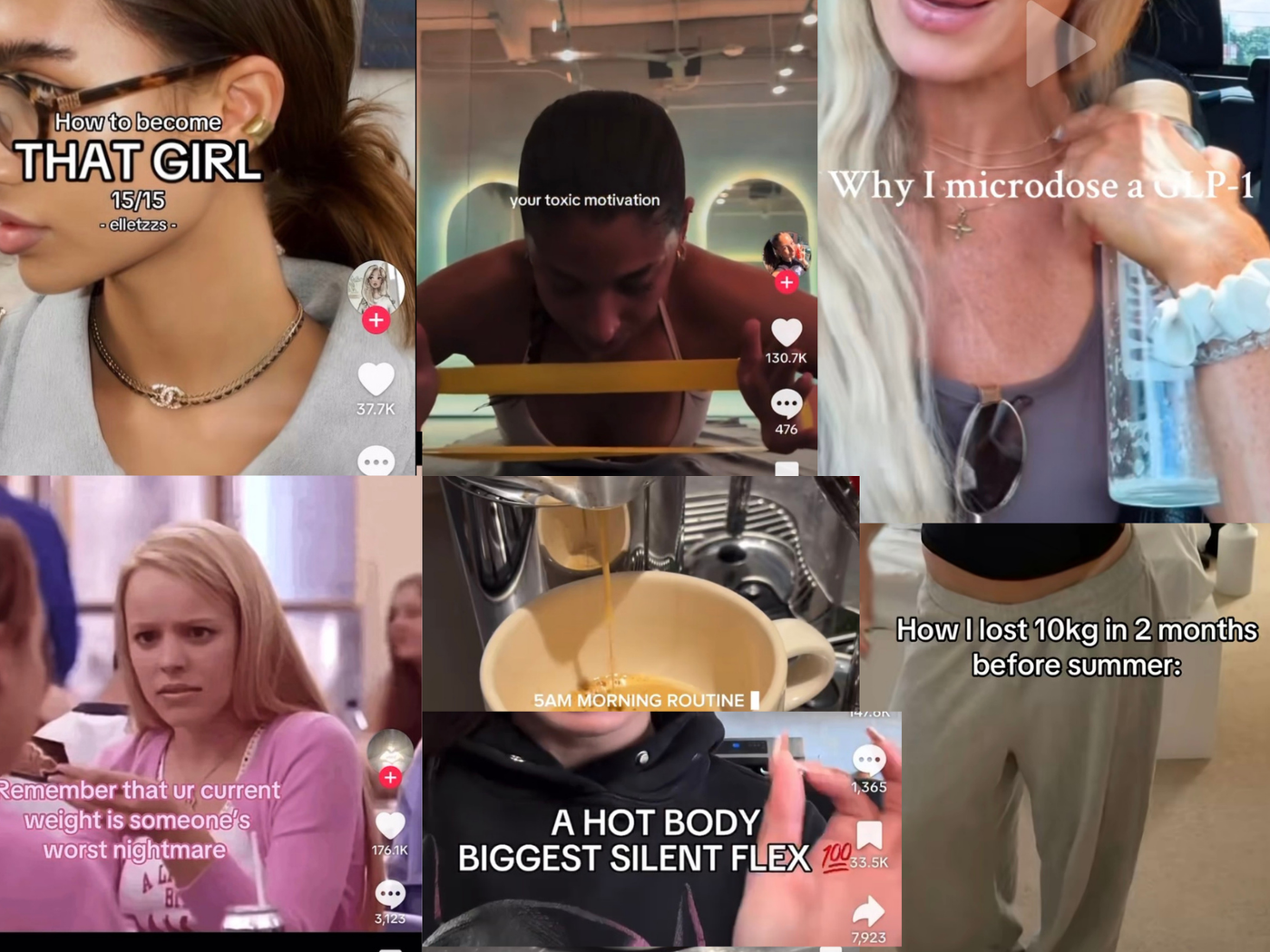
Body positive activists are optimistic, while Jillian is pessimistic. I stand somewhere in between.
We’ve come a long way compared to 15 years ago. There’s more awareness now, especially among younger generations. More sensitivity, more care, more compassion. Has it eradicated diet culture, SkinnyTok, peptides, GLP-1 conversations? Unfortunately not. But there has been progress and I think it’s important not to lose sight of that or become overly cynical.
At the same time, I agree with Jillian on this: if you’re a teenager and you’re struggling, you can’t wait for the entire world to change its mind about bodies and diets before you start living your life.
The question that comes up for me is:
Do you really want to spend your life feeling miserable, waiting for the world to accept you?
Because if your wellbeing depends on diet culture disappearing… that might never happen.
So Where Does Change Start?
At some point, the shift has to be internal—how you relate to the outside world—not just waiting for the outside world to change.
We need both internal resilience and societal change.
When someone tells me, “the media made me feel this way,” I don’t fully believe that’s the whole story.
Did the media play a role? Yes, often a significant one. But usually, it’s building on something that was already there.
From a therapeutic perspective, the roots tend to go back to early environments—caregivers, peers, the messages you received growing up.
A sociologist might focus more on the societal level, which is valid. But in therapy, I focus on the individual level—without ignoring the wider context.
Because when those early foundations are shaky, you become much more vulnerable to what the media reinforces.
Start with what happened to you, personally. Tend your garden first. Make sure your flowers blossom, your grass is green and butterflies are flying there.
Then help tend other gardens.
📎 Resources
🌱 In case you haven’t already, don’t forget to download your FREE Emergency Recovery Kit for Bad Body Image Days here.
This essay was first published on my newsletter. Read the original on Substack →