How Therapy Can Help When Your Body Never Feels “Good Enough”
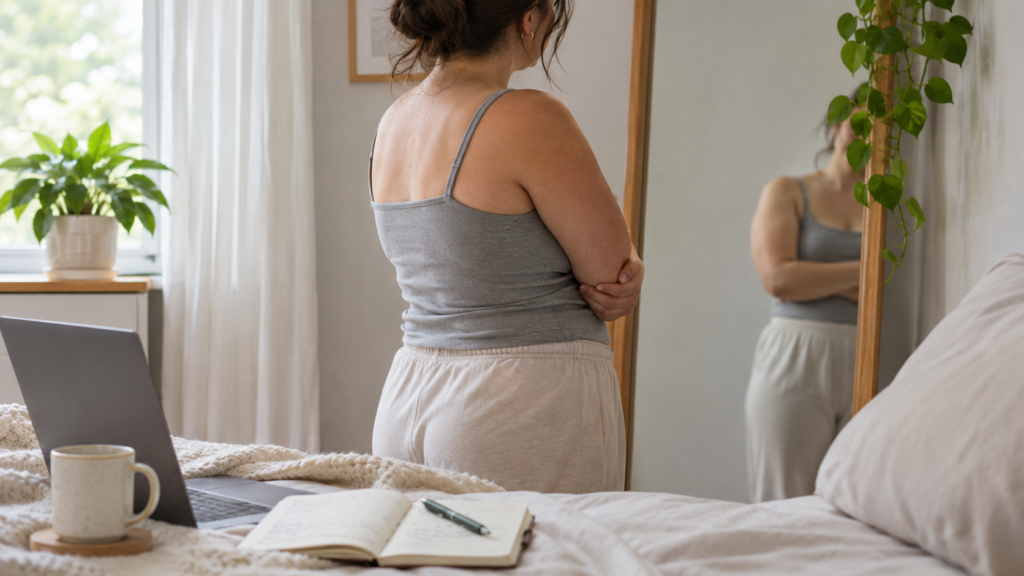
When your body never feels “good enough,” the problem often extends beyond appearance itself. The distress may involve comparison, repeated checking, perfectionistic standards, reassurance seeking, avoidance, and the belief that confidence will only become possible once the body looks different. Body Image Therapy helps examine these patterns and reduce the amount of influence appearance has over mood, self-worth, relationships, eating, and everyday decisions.
Therapy does not require someone to convince themselves that they love their body. A more realistic goal is often developing enough flexibility that a difficult thought about appearance no longer controls what happens next.
Feeling “Not Good Enough” Can Become A Moving Target
Body dissatisfaction often creates the idea that one physical change will finally make someone feel comfortable.
The person may think:
“If this part of my body changed, I would feel better.”
Sometimes a change happens.
The relief may last briefly, but attention then moves to another perceived problem.
The standard changes again.
This moving target can make lasting satisfaction difficult because the real issue is not always one physical feature. The person has learned to evaluate themselves through constant appearance monitoring.
Comparison Can Keep The Standard Unrealistic
Comparison is one of the most common ways the “not good enough” feeling is maintained.
Someone may compare themselves with friends, strangers, social media images, or older photographs.
The comparison is rarely neutral.
People tend to compare the part of themselves they feel most critical about with the feature they admire most in someone else.
Context is often ignored.
Lighting, posture, genetics, image selection, editing, age, and normal physical variation receive very little attention.
The comparison therefore reinforces a standard that is difficult to meet.
Body Checking Can Create More Doubt
Checking often begins as an attempt to feel reassured.
Someone may look in the mirror repeatedly, inspect one area from different angles, check photographs, or assess how clothing fits.
The intention is usually to answer a question:
“Do I look okay?”
The problem is that the answer rarely lasts.
Different lighting or posture can create a new doubt.
The person checks again.
This cycle teaches the mind that appearance must constantly be monitored.
Over time, the person may feel less certain about their body rather than more.
Avoidance Can Make Appearance Feel More Powerful
Other people respond to body dissatisfaction by avoiding the body.
They may avoid photographs, mirrors, fitted clothing, swimming, intimacy, or social events.
Avoidance provides short-term relief.
There is no photograph to analyse and no situation in which the person feels exposed.
However, the avoided situation can become increasingly difficult over time.
The person receives no opportunity to learn that they may be able to tolerate discomfort without escaping.
This is one reason body image concerns can gradually affect much more than appearance.
Self-Worth Can Become Too Dependent On The Body
A difficult body image day can become emotionally powerful when appearance carries too much responsibility for self-worth.
Someone may feel competent, attractive, or socially comfortable only when they believe they look acceptable.
A photograph they dislike can undo confidence from other parts of life.
Therapy may therefore explore how personal worth became connected with appearance.
The work can help make space for other parts of identity:
relationships, values, humour, creativity, work, interests, abilities, and character.
Appearance may still matter.
It simply becomes one part of the self rather than the main measure of value.
Perfectionism Can Make Satisfaction Almost Impossible
The standard of being “good enough” is sometimes shaped by perfectionism.
If appearance must be exactly right before someone feels comfortable, normal variation becomes difficult to tolerate.
Bodies change throughout the day.
Posture changes.
Clothes sit differently.
Fullness, hydration, hormones, sleep, and stress can alter how someone feels physically.
A perfectionistic standard interprets these normal differences as problems that require correction.
Body Image Therapy can help someone recognise when they are applying impossible standards to a body that naturally changes.
Difficult Emotions Can Affect Body Perception
Body image does not remain constant from day to day.
Stress, fatigue, sadness, anxiety, or interpersonal conflict can make appearance feel worse even when little has physically changed.
Someone may experience emotional discomfort and interpret it as:
“My body looks terrible today.”
Therapy can help separate the feeling from the conclusion.
Feeling uncomfortable in the body is real.
It does not necessarily mean the body has objectively changed in a meaningful way.
This distinction can reduce the urge to immediately check, restrict, hide, or seek reassurance.
Body Image Can Influence Eating
Feeling “not good enough” can also affect food.
Someone may restrict after seeing a photograph they dislike.
A difficult mirror experience may create pressure to exercise more.
Eating a larger meal may lead to body checking later.
These behaviours can strengthen the connection between appearance and food control.
Therapy can help interrupt this sequence.
For a broader explanation of how psychological treatment works with these patterns, How Does Body Image Therapy Help You Change the Way You See Your Body? explores the relationship between perception, behaviour, and self-evaluation.
Therapy Can Reduce The Need For Constant Reassurance
Reassurance often feels helpful in the moment.
Someone may ask:
“Do I look different?”
“Does this make me look bigger?”
“Are you sure I look okay?”
A reassuring answer reduces anxiety temporarily.
Later, the doubt returns.
This can create dependence on other people’s opinions.
Therapy can help someone tolerate uncertainty without needing repeated confirmation.
The goal is not complete certainty about appearance.
It is learning that uncertainty can exist without requiring immediate action.
Body Neutrality Can Be More Useful Than Forced Positivity
Trying to replace every negative body thought with a positive statement can sometimes feel artificial.
Therapy may instead focus on neutrality.
A person can think:
“I am uncomfortable with how I look today.”
They can still eat normally.
They can still meet friends.
They can still wear the planned outfit.
The difficult thought is present, but it does not dictate the day.
This is often a more sustainable form of progress than expecting permanent confidence.
Online Therapy Can Support Body Image Work
Many body image triggers occur at home.
Mirrors, wardrobes, photographs, social media, meals, and body checking may all be part of everyday routines.
When body image concerns overlap with eating-related difficulties, online therapy for eating and body image concerns can provide structured psychological support when remote therapy is appropriate.
Online work may involve identifying triggers, reducing checking, working with avoidance, challenging perfectionistic standards, and changing responses to difficult body image days.
Progress Means The Body Has Less Control Over Your Life
Progress does not require thinking your body looks perfect.
Someone may still have days when appearance feels difficult.
What changes is the response.
A mirror no longer determines whether they can leave home.
A photograph does not require hours of analysis.
A body-related thought does not automatically change eating.
Confidence begins to come from more than appearance.
This shift is central to Body Image Therapy: the aim is not to create a perfect body image, but to make the body less responsible for deciding whether someone is good enough.
Frequently Asked Questions
1. Why Does My Body Never Feel Good Enough?
Constant comparison, perfectionism, checking, reassurance seeking, and appearance-based self-worth can make satisfaction difficult even when the body itself changes.
2. Can Therapy Change How I See My Body?
Therapy can help change attention patterns, beliefs, checking behaviours, avoidance, and the meaning attached to appearance.
3. Does Body Image Therapy Mean Learning To Love My Body?
Not necessarily. Body neutrality and greater flexibility can be more realistic goals than expecting constant positive feelings about appearance.
4. Can Negative Body Image Affect Eating?
Yes. Body dissatisfaction may contribute to restriction, compensatory exercise, food rules, or other attempts to control appearance through eating.
5. Can Body Image Therapy Be Done Online?
Yes. Online therapy can address checking, comparison, avoidance, self-criticism, and related eating patterns when remote care is appropriate.