Online vs In-Person Eating Disorder Therapy: What Changes?
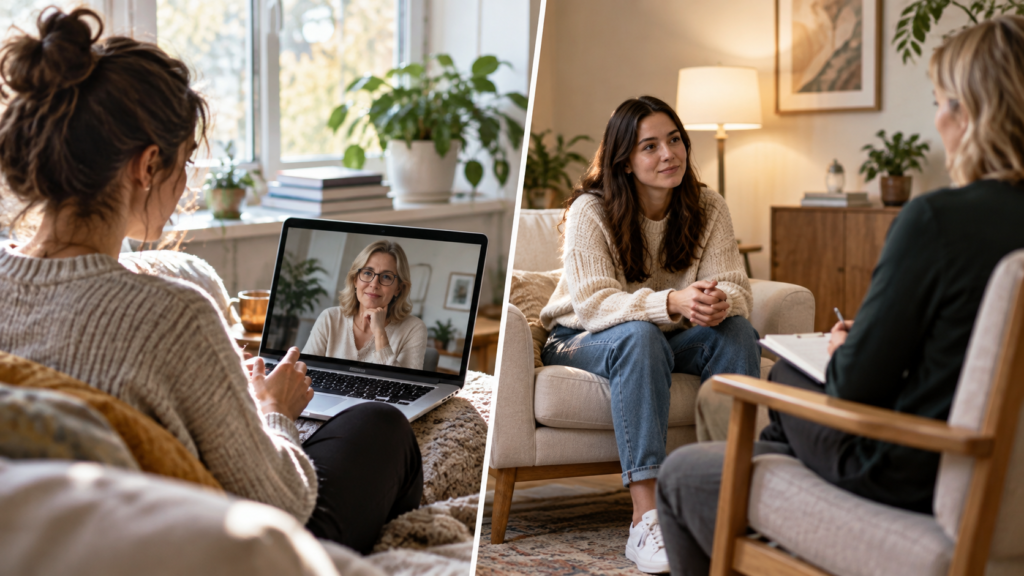
Online and in-person eating disorder therapy can address many of the same psychological and behavioural patterns, but the way sessions fit into daily life is different. Both formats may explore restrictive eating, binge eating, rigid food rules, compensatory behaviours, meal-related anxiety, avoidance, and persistent thoughts about food. The main differences usually involve setting, privacy, accessibility, therapeutic logistics, and how additional medical or nutritional care is coordinated. Neither format is automatically better for everyone; the appropriate choice depends on clinical needs, personal circumstances, and the level of support required.
For people considering remote care, Online Eating Disorder Therapy can provide structured psychological support without regular travel when online outpatient treatment is suitable.
The Core Therapy Work Can Be Similar
Eating disorder therapy does not become fundamentally different because the therapist and client are in separate rooms.
In both online and face-to-face sessions, a therapist may explore eating patterns, triggers, food rules, emotional responses, avoidance, and the thoughts that maintain difficult behaviours.
Someone experiencing restrictive eating may work on flexibility and fear around changing routines. A person struggling with binge eating may examine restriction, emotional triggers, loss of control, and what happens after an episode.
The therapeutic goals remain focused on understanding and changing the patterns that keep eating difficulties active.
The delivery method changes, but the clinical purpose does not necessarily change with it.
Online Therapy Changes The Physical Setting
The most obvious difference is where therapy happens.
In-person therapy usually takes place in a dedicated clinical room. This creates physical separation between therapy and everyday life.
Online sessions happen in the client’s own environment.
For some people, this feels more comfortable. Being at home may reduce travel stress and make it easier to attend consistently.
For others, the home environment can make privacy more difficult.
Family members, partners, children, or housemates may be nearby. A client may need headphones, a closed door, or a quieter space to speak openly.
The suitability of online therapy therefore depends partly on whether a private and reliable setting is available.
Online Therapy Can Reduce Access Barriers
Specialist eating disorder therapists are not equally available in every location.
Someone may live far from a clinician with relevant experience or struggle to fit travel into work, study, or family responsibilities.
Online therapy can widen access by reducing geographical limitations.
It may also help people who travel frequently or divide their time between different locations maintain continuity with the same therapist, where professional regulations allow.
This can be particularly useful when eating disorder treatment requires regular sessions over time.
Accessibility does not remove the need for clinical assessment, but it can make consistent therapy more realistic for many people.
In-Person Therapy Provides A Dedicated Clinical Environment
Some clients prefer the separation created by travelling to a therapy room.
The physical journey can provide time to prepare before a session and decompress afterward.
A dedicated setting may also feel more private than home.
In-person appointments can be useful for people who find it difficult to concentrate through video or whose home environment is frequently interrupted.
The therapist may also observe more of the client’s overall body language and movement within the room.
These factors do not automatically make in-person treatment more effective, but they can influence how comfortable and engaged a particular person feels during therapy.
The Therapeutic Relationship Can Develop In Both Formats
A common concern is whether online therapy feels less personal.
Therapeutic relationships can develop through video when sessions are regular, confidential, and clinically focused.
Trust usually comes from being listened to, feeling respected, understanding why particular interventions are suggested, and being able to discuss setbacks or disagreement openly.
These elements can exist online or in person.
Some people feel more comfortable opening up from their own home. Others find physical presence more reassuring.
The quality of the relationship depends less on the screen itself and more on fit, communication, consistency, and professional boundaries.
If you are unsure how remote care compares more broadly, Does Online Therapy Work for Eating Disorders? explores this question in more detail.
Behavioural Work Can Happen In Either Setting
Eating disorder therapy often includes more than conversation.
A therapist may help someone identify triggers, test rigid beliefs, reduce avoidance, or practise responding differently to familiar patterns.
Online therapy can sometimes connect these exercises more directly with everyday surroundings.
For example, the client may be sitting in the same home where meal rules, checking behaviours, or binge episodes usually occur.
In-person therapy offers a more separate environment, which can help some people reflect without being surrounded by usual triggers.
Both formats can support behavioural change when treatment is structured appropriately.
Medical Monitoring Is Separate From Psychotherapy
Eating disorders can affect physical health, and this is important in both online and in-person therapy.
A psychotherapist cannot replace medical assessment when physical monitoring is necessary.
Depending on the person’s symptoms, care may involve a doctor, dietitian, psychiatrist, or specialist eating disorder service.
The difference is logistical.
Someone attending online therapy may need to arrange local medical appointments separately. An in-person therapist may also rely on other healthcare professionals for medical monitoring.
The key issue is not whether therapy happens online or face to face, but whether the overall level of care matches the person’s needs.
Online Therapy Requires More Attention To Technology
Video sessions depend on a stable internet connection and suitable device.
Technical problems can interrupt emotionally important conversations.
A client may need to test their camera, microphone, and platform before appointments.
In-person therapy avoids most technology-related issues but introduces travel, parking, transport, and scheduling considerations instead.
Neither format is completely free of practical barriers.
The more useful question is which set of practical demands is easier to manage consistently.
Privacy Works Differently In Each Format
Face-to-face therapy usually provides privacy through the clinic itself.
Online therapy places more responsibility on the client’s environment.
Someone may feel unable to discuss binge episodes, restriction, body image, or compensatory behaviours if another person can hear them.
A suitable online setup should allow honest conversation without constant monitoring of who might walk into the room.
For clients with good privacy at home, online therapy can feel highly contained. For others, in-person care may provide a better environment.
Choosing Between Online And In-Person Therapy
The decision should consider more than convenience.
Useful factors include:
- clinical needs;
- physical health;
- privacy;
- therapist availability;
- travel demands;
- comfort with video communication;
- ability to attend regularly;
- access to local additional care.
Some people strongly prefer one format. Others may be comfortable with either.
A therapist can help assess whether online outpatient therapy is appropriate and whether additional support should be arranged alongside psychological treatment.
Therapy Format Can Change Over Time
The best format at one stage may not remain the best format forever.
Someone may begin in person and later move to online sessions because of relocation or travel.
Another person may start online and later require more intensive or locally coordinated care.
This does not mean one format failed.
Treatment should adapt when clinical needs or practical circumstances change.
The goal is to maintain a level of support that remains safe, accessible, and therapeutically useful.
Frequently Asked Questions
1. Is Online Eating Disorder Therapy Different From In-Person Therapy?
The core psychological work can be similar. The main differences involve setting, privacy, travel, technology, and coordination with local healthcare.
2. Is Online Therapy Suitable For Every Eating Disorder?
No. Suitability depends on symptom severity, physical health, risk, privacy, and whether remote outpatient care provides enough support.
3. Can Online Therapy Address Restrictive Eating And Binge Eating?
Yes. Online therapy can address restrictive eating, binge eating, rigid food rules, emotional triggers, and related patterns when clinically appropriate.
4. Is The Therapeutic Relationship Weaker Online?
Not necessarily. A strong therapeutic relationship can develop online when sessions are consistent, confidential, collaborative, and professionally structured.
5. Can I Switch Between Online And In-Person Therapy?
Potentially, yes. The format may change depending on therapist availability, location, clinical needs, and professional arrangements.